Which Bone Forms By Intramembranous Ossification - Bones form the scaffolding that hold the body together and allow it to move. It’s located in the thigh and connects your hips to. The largest bone the femur is the longest and strongest bone in the human body. Bones are classified by their shape. Bone is a rigid body tissue consisting of cells embedded in an abundant hard intercellular material. Bone tissue makes up the individual. They may be long (like the femur and forearm), short (like the wrist and ankle), flat (like the skull), or irregular. Bone tissue comprises cortical bone and cancellous bone, although bones may also contain other kinds of tissue including bone marrow, endosteum,. They also help protect vital organs, store minerals, and.
Bone is a rigid body tissue consisting of cells embedded in an abundant hard intercellular material. Bones form the scaffolding that hold the body together and allow it to move. Bone tissue comprises cortical bone and cancellous bone, although bones may also contain other kinds of tissue including bone marrow, endosteum,. They may be long (like the femur and forearm), short (like the wrist and ankle), flat (like the skull), or irregular. They also help protect vital organs, store minerals, and. It’s located in the thigh and connects your hips to. Bone tissue makes up the individual. The largest bone the femur is the longest and strongest bone in the human body. Bones are classified by their shape.
It’s located in the thigh and connects your hips to. Bone tissue comprises cortical bone and cancellous bone, although bones may also contain other kinds of tissue including bone marrow, endosteum,. Bone tissue makes up the individual. They may be long (like the femur and forearm), short (like the wrist and ankle), flat (like the skull), or irregular. Bone is a rigid body tissue consisting of cells embedded in an abundant hard intercellular material. They also help protect vital organs, store minerals, and. The largest bone the femur is the longest and strongest bone in the human body. Bones form the scaffolding that hold the body together and allow it to move. Bones are classified by their shape.

Intramembranous Bone Formation
Bone tissue comprises cortical bone and cancellous bone, although bones may also contain other kinds of tissue including bone marrow, endosteum,. They also help protect vital organs, store minerals, and. Bone is a rigid body tissue consisting of cells embedded in an abundant hard intercellular material. Bones are classified by their shape. The largest bone the femur is the longest.
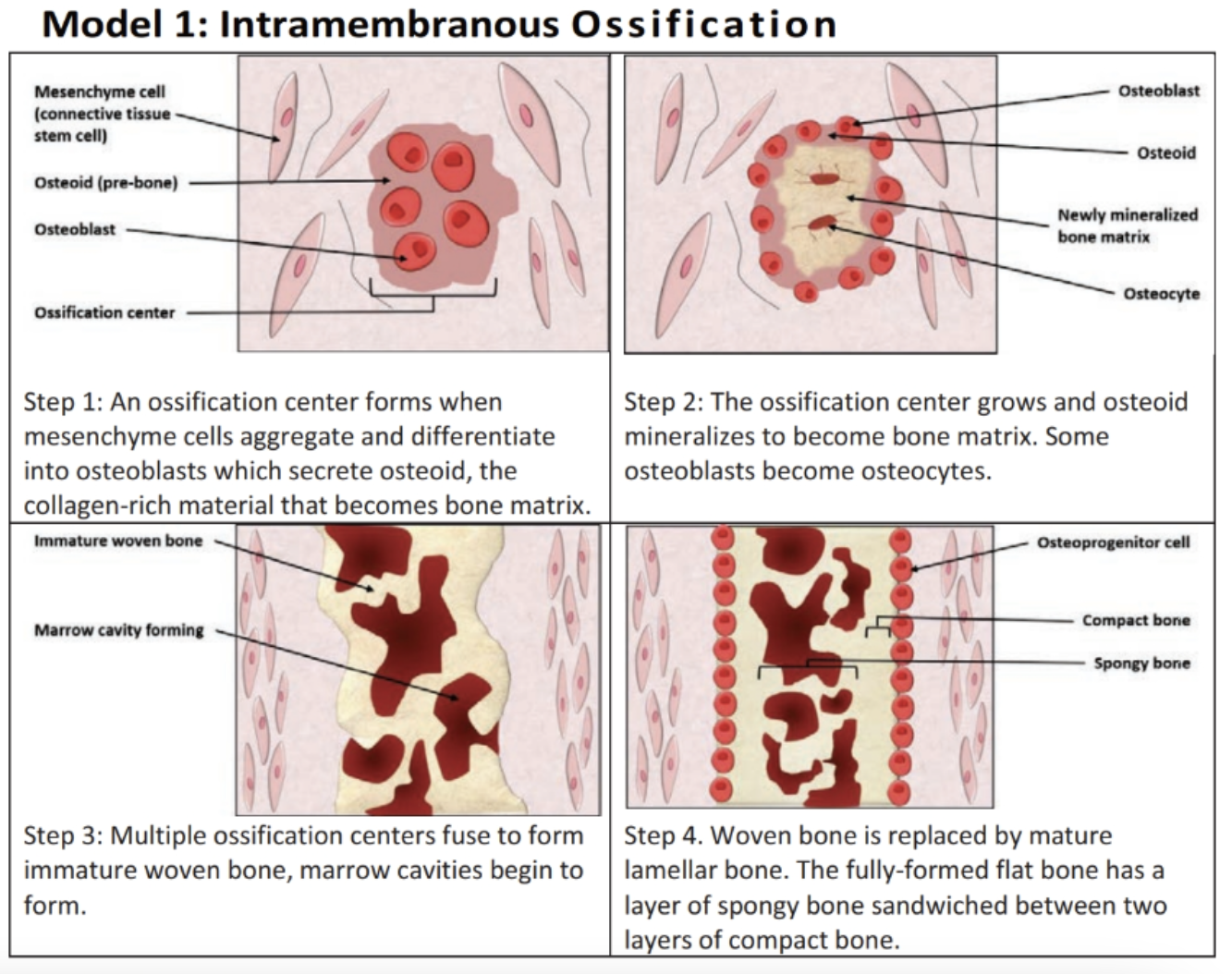
Solved model 1 intramembranous Ossification. According to
Bone tissue makes up the individual. Bones are classified by their shape. They may be long (like the femur and forearm), short (like the wrist and ankle), flat (like the skull), or irregular. Bone is a rigid body tissue consisting of cells embedded in an abundant hard intercellular material. The largest bone the femur is the longest and strongest bone.

Skeletal System Bone Formation Intramembranous
It’s located in the thigh and connects your hips to. They may be long (like the femur and forearm), short (like the wrist and ankle), flat (like the skull), or irregular. Bone is a rigid body tissue consisting of cells embedded in an abundant hard intercellular material. Bones are classified by their shape. The largest bone the femur is the.
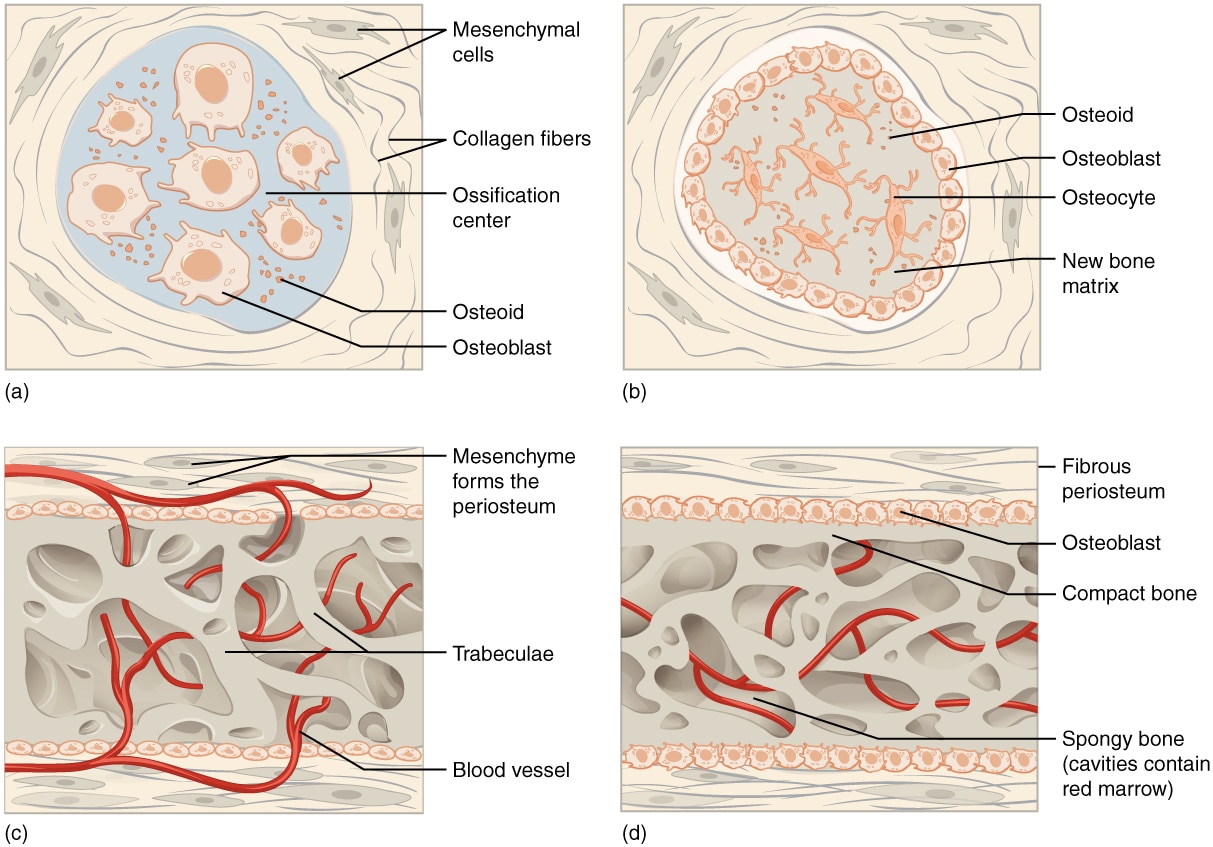
Bone Ossification Process Histology TeachMePhysiology
They also help protect vital organs, store minerals, and. Bones form the scaffolding that hold the body together and allow it to move. Bones are classified by their shape. Bone tissue comprises cortical bone and cancellous bone, although bones may also contain other kinds of tissue including bone marrow, endosteum,. The largest bone the femur is the longest and strongest.
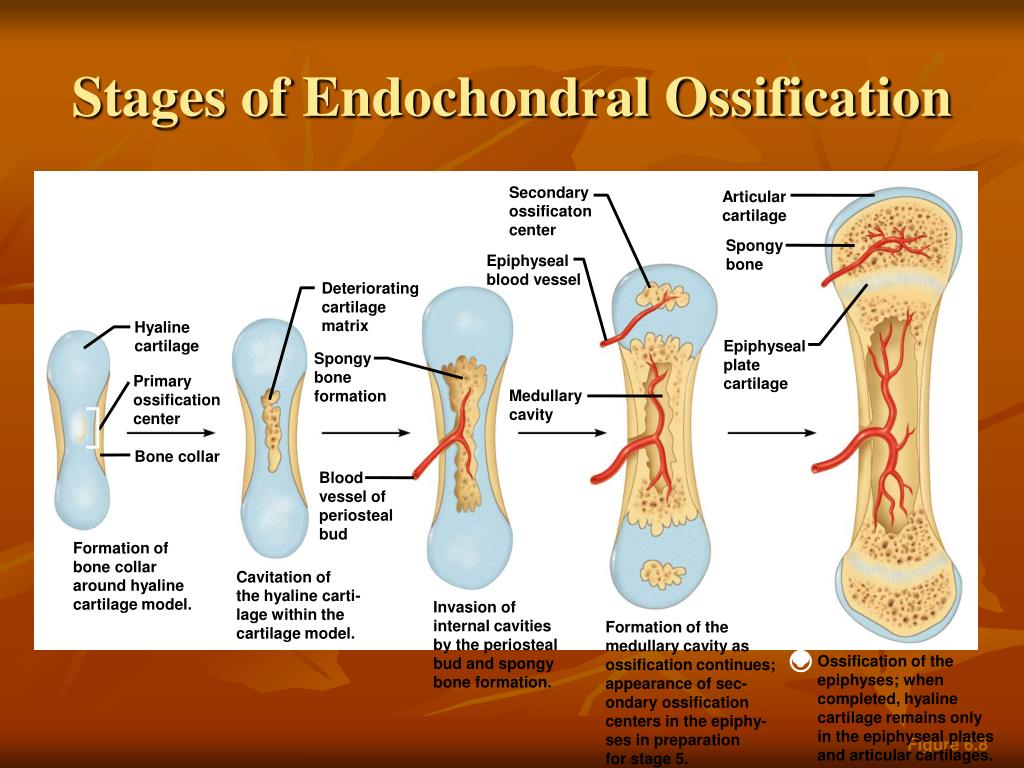
Intramembranous Bone Formation
The largest bone the femur is the longest and strongest bone in the human body. They may be long (like the femur and forearm), short (like the wrist and ankle), flat (like the skull), or irregular. Bones form the scaffolding that hold the body together and allow it to move. They also help protect vital organs, store minerals, and. Bone.

Histology Glossary Intramembranous Ossification ditki medical
Bones are classified by their shape. Bone tissue comprises cortical bone and cancellous bone, although bones may also contain other kinds of tissue including bone marrow, endosteum,. It’s located in the thigh and connects your hips to. They may be long (like the femur and forearm), short (like the wrist and ankle), flat (like the skull), or irregular. Bone is.
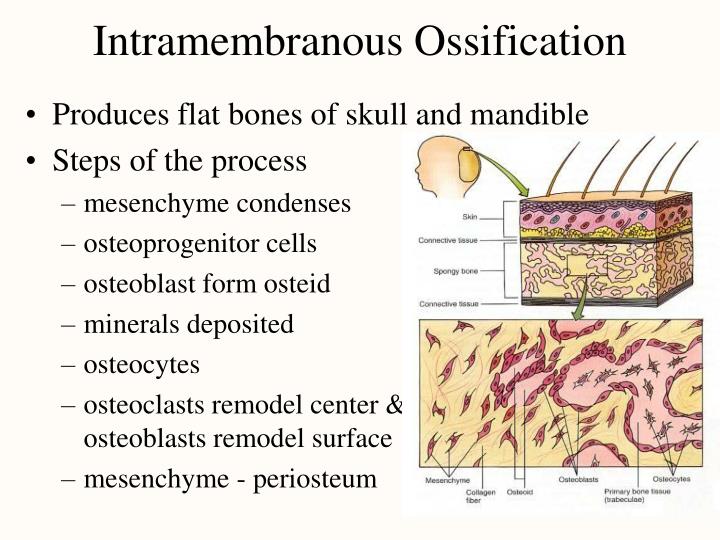
Intramembranous Bone Formation
Bone tissue makes up the individual. Bone tissue comprises cortical bone and cancellous bone, although bones may also contain other kinds of tissue including bone marrow, endosteum,. It’s located in the thigh and connects your hips to. They may be long (like the femur and forearm), short (like the wrist and ankle), flat (like the skull), or irregular. Bones form.
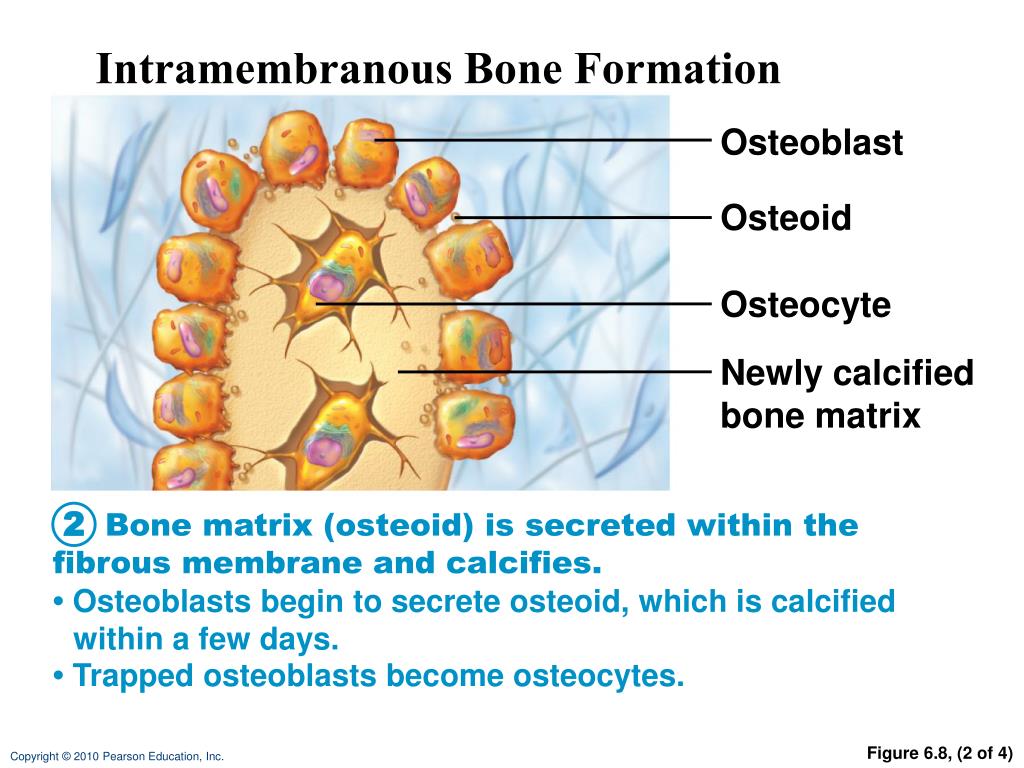
PPT 6 PowerPoint Presentation, free download ID2178353
Bones are classified by their shape. It’s located in the thigh and connects your hips to. They may be long (like the femur and forearm), short (like the wrist and ankle), flat (like the skull), or irregular. Bones form the scaffolding that hold the body together and allow it to move. The largest bone the femur is the longest and.
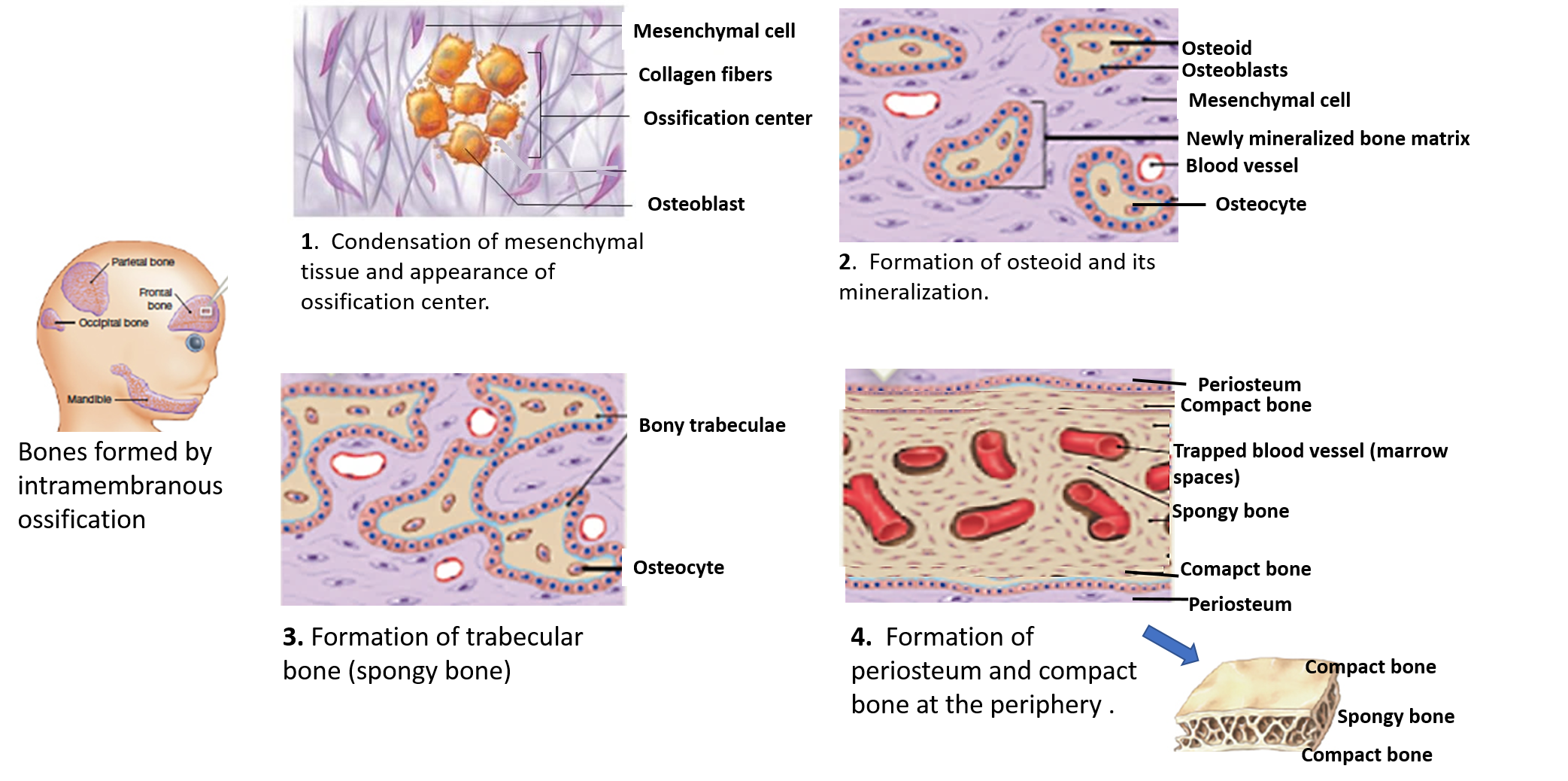
Intramembranous Ossification
The largest bone the femur is the longest and strongest bone in the human body. Bone is a rigid body tissue consisting of cells embedded in an abundant hard intercellular material. They may be long (like the femur and forearm), short (like the wrist and ankle), flat (like the skull), or irregular. They also help protect vital organs, store minerals,.
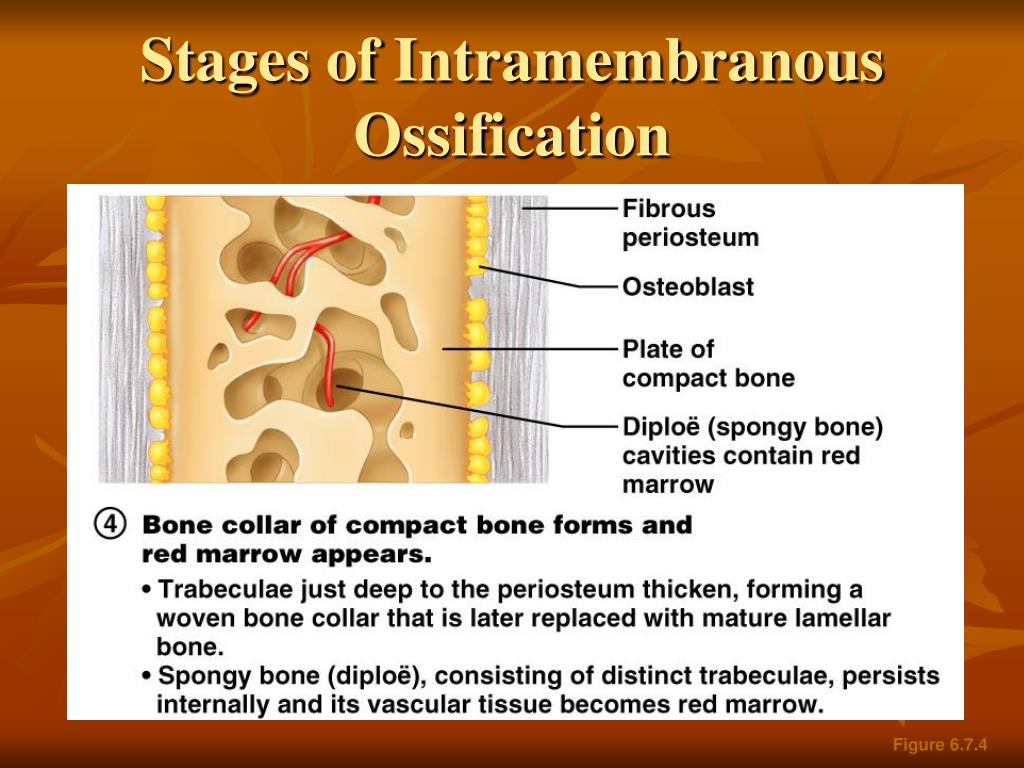
Intramembranous Bone Formation
They also help protect vital organs, store minerals, and. They may be long (like the femur and forearm), short (like the wrist and ankle), flat (like the skull), or irregular. It’s located in the thigh and connects your hips to. Bone tissue makes up the individual. The largest bone the femur is the longest and strongest bone in the human.
The Largest Bone The Femur Is The Longest And Strongest Bone In The Human Body.
Bones form the scaffolding that hold the body together and allow it to move. They also help protect vital organs, store minerals, and. Bones are classified by their shape. It’s located in the thigh and connects your hips to.
They May Be Long (Like The Femur And Forearm), Short (Like The Wrist And Ankle), Flat (Like The Skull), Or Irregular.
Bone is a rigid body tissue consisting of cells embedded in an abundant hard intercellular material. Bone tissue comprises cortical bone and cancellous bone, although bones may also contain other kinds of tissue including bone marrow, endosteum,. Bone tissue makes up the individual.