Where Do Clouds Form When There Is A Warm Front - They form from behind the moving cold front because the warm air condenses quickly producing clouds, rain, and stormy weather. No, different types of clouds do not cause a cold front. Clouds form along fronts when there is some type of uplift of air. In summary, the formation of clouds in front of a warm front is primarily due to the warm air rising over cooler air, leading to cooling and. For example in a warm front, there is cool air ahead of the front and so. Clouds form as warm air rises over cooler air during a warm front, leading to various cloud types such as cirrus, cirrostratus, and. A cold front forms when a mass of cold air advances and displaces warmer air, creating a.
Clouds form along fronts when there is some type of uplift of air. They form from behind the moving cold front because the warm air condenses quickly producing clouds, rain, and stormy weather. Clouds form as warm air rises over cooler air during a warm front, leading to various cloud types such as cirrus, cirrostratus, and. No, different types of clouds do not cause a cold front. For example in a warm front, there is cool air ahead of the front and so. In summary, the formation of clouds in front of a warm front is primarily due to the warm air rising over cooler air, leading to cooling and. A cold front forms when a mass of cold air advances and displaces warmer air, creating a.
For example in a warm front, there is cool air ahead of the front and so. Clouds form along fronts when there is some type of uplift of air. A cold front forms when a mass of cold air advances and displaces warmer air, creating a. Clouds form as warm air rises over cooler air during a warm front, leading to various cloud types such as cirrus, cirrostratus, and. In summary, the formation of clouds in front of a warm front is primarily due to the warm air rising over cooler air, leading to cooling and. No, different types of clouds do not cause a cold front. They form from behind the moving cold front because the warm air condenses quickly producing clouds, rain, and stormy weather.
.PNG)
Other Cloud Types
Clouds form along fronts when there is some type of uplift of air. In summary, the formation of clouds in front of a warm front is primarily due to the warm air rising over cooler air, leading to cooling and. For example in a warm front, there is cool air ahead of the front and so. A cold front forms.

Typical warm front weather conditions in winter heading towards the
Clouds form along fronts when there is some type of uplift of air. No, different types of clouds do not cause a cold front. They form from behind the moving cold front because the warm air condenses quickly producing clouds, rain, and stormy weather. For example in a warm front, there is cool air ahead of the front and so..

PPT Ch15 Global Circulation and Weather PowerPoint Presentation ID
They form from behind the moving cold front because the warm air condenses quickly producing clouds, rain, and stormy weather. For example in a warm front, there is cool air ahead of the front and so. Clouds form along fronts when there is some type of uplift of air. No, different types of clouds do not cause a cold front..

WEATHER FRONTS AND AIR MASSES ppt video online download
In summary, the formation of clouds in front of a warm front is primarily due to the warm air rising over cooler air, leading to cooling and. A cold front forms when a mass of cold air advances and displaces warmer air, creating a. Clouds form along fronts when there is some type of uplift of air. Clouds form as.

127 What are air masses?. ppt download
Clouds form along fronts when there is some type of uplift of air. No, different types of clouds do not cause a cold front. Clouds form as warm air rises over cooler air during a warm front, leading to various cloud types such as cirrus, cirrostratus, and. In summary, the formation of clouds in front of a warm front is.

Fronts. ppt download
In summary, the formation of clouds in front of a warm front is primarily due to the warm air rising over cooler air, leading to cooling and. No, different types of clouds do not cause a cold front. Clouds form as warm air rises over cooler air during a warm front, leading to various cloud types such as cirrus, cirrostratus,.
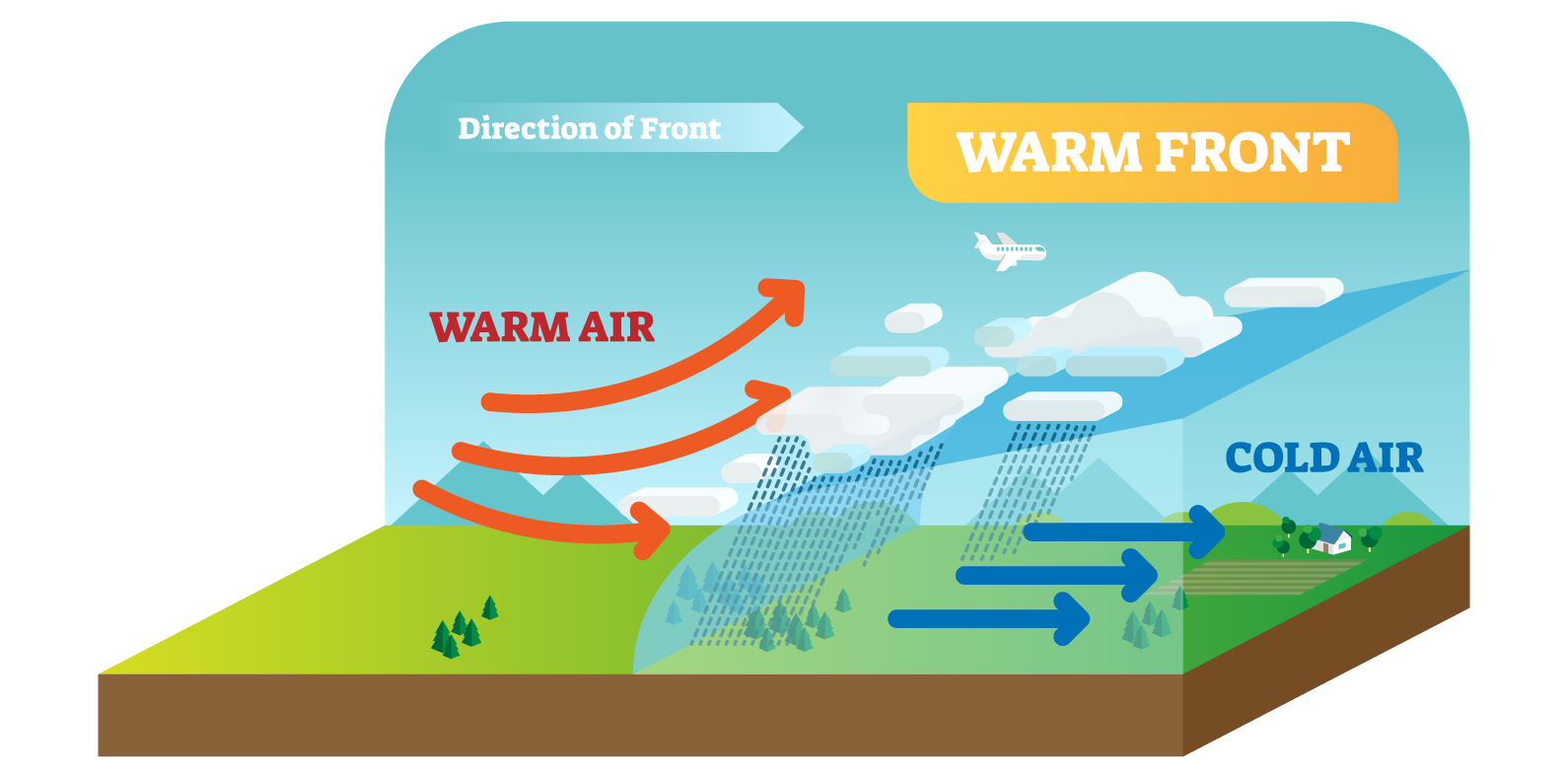
Warm Front On A Weather Map Map
In summary, the formation of clouds in front of a warm front is primarily due to the warm air rising over cooler air, leading to cooling and. For example in a warm front, there is cool air ahead of the front and so. No, different types of clouds do not cause a cold front. Clouds form along fronts when there.

PPT Clouds PowerPoint Presentation, free download ID1897810
Clouds form along fronts when there is some type of uplift of air. A cold front forms when a mass of cold air advances and displaces warmer air, creating a. No, different types of clouds do not cause a cold front. Clouds form as warm air rises over cooler air during a warm front, leading to various cloud types such.
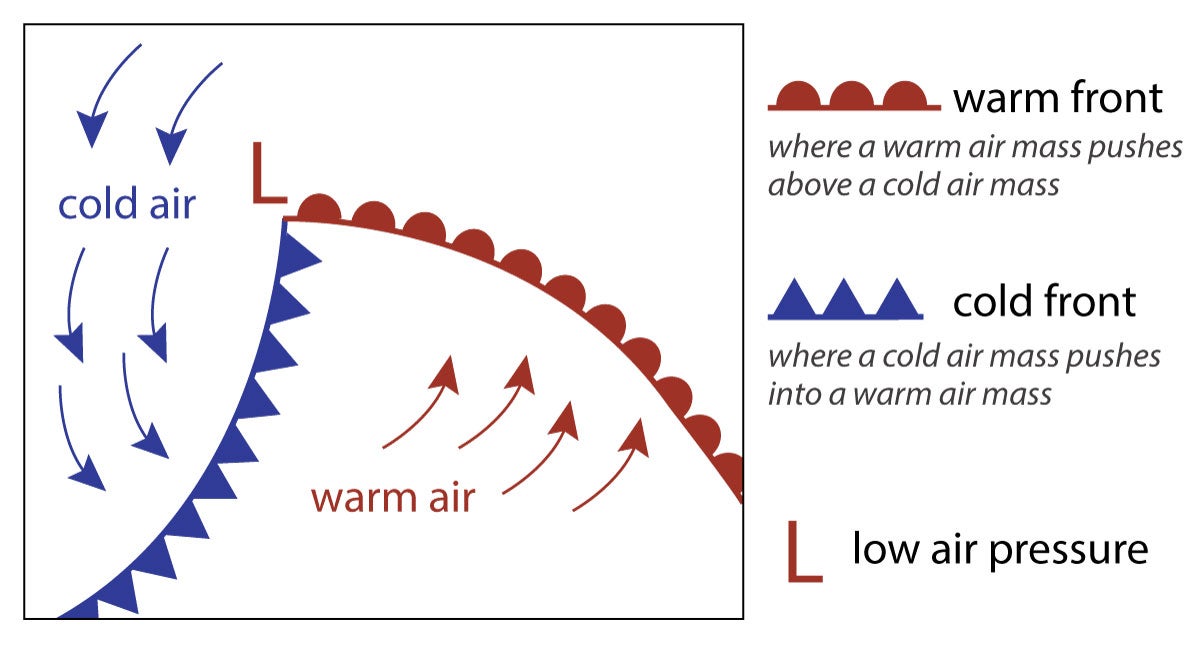
Anatomy of a Storm’s Clouds Center for Science Education
In summary, the formation of clouds in front of a warm front is primarily due to the warm air rising over cooler air, leading to cooling and. Clouds form along fronts when there is some type of uplift of air. Clouds form as warm air rises over cooler air during a warm front, leading to various cloud types such as.

Warm Front Warm front, Weather fronts, Earth science
Clouds form as warm air rises over cooler air during a warm front, leading to various cloud types such as cirrus, cirrostratus, and. They form from behind the moving cold front because the warm air condenses quickly producing clouds, rain, and stormy weather. In summary, the formation of clouds in front of a warm front is primarily due to the.
In Summary, The Formation Of Clouds In Front Of A Warm Front Is Primarily Due To The Warm Air Rising Over Cooler Air, Leading To Cooling And.
A cold front forms when a mass of cold air advances and displaces warmer air, creating a. For example in a warm front, there is cool air ahead of the front and so. They form from behind the moving cold front because the warm air condenses quickly producing clouds, rain, and stormy weather. Clouds form as warm air rises over cooler air during a warm front, leading to various cloud types such as cirrus, cirrostratus, and.
Clouds Form Along Fronts When There Is Some Type Of Uplift Of Air.
No, different types of clouds do not cause a cold front.