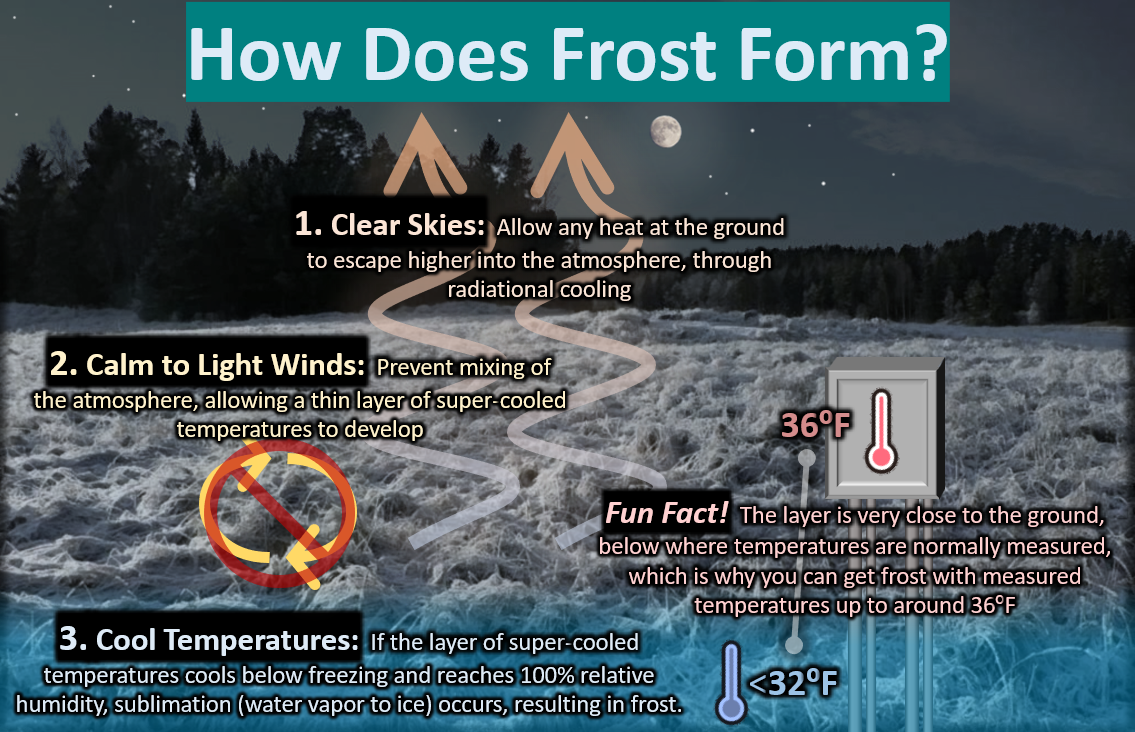
How Does Frost Form - Have you ever wondered why frost can form on nights when the temperatures only fall to 36 or 37 degrees? A frost occurs when the air temperature drops below the freezing point of water, which is 0°c (32°f). During a freeze, water in the. This causes the air to condense as. For frost to form, the ground temperature needs to fall below freezing, and below the dew point temperature. At night, a blade of grass loses energy by emitting radiation (a non. Frost forms on objects close to the ground, such as blades of grass. Frost is a meteorological phenomenon that occurs when moisture in the air is condensed and freezes in the form of tiny ice crystals on.
For frost to form, the ground temperature needs to fall below freezing, and below the dew point temperature. This causes the air to condense as. A frost occurs when the air temperature drops below the freezing point of water, which is 0°c (32°f). Frost forms on objects close to the ground, such as blades of grass. During a freeze, water in the. Have you ever wondered why frost can form on nights when the temperatures only fall to 36 or 37 degrees? At night, a blade of grass loses energy by emitting radiation (a non. Frost is a meteorological phenomenon that occurs when moisture in the air is condensed and freezes in the form of tiny ice crystals on.
A frost occurs when the air temperature drops below the freezing point of water, which is 0°c (32°f). Frost is a meteorological phenomenon that occurs when moisture in the air is condensed and freezes in the form of tiny ice crystals on. During a freeze, water in the. At night, a blade of grass loses energy by emitting radiation (a non. Frost forms on objects close to the ground, such as blades of grass. Have you ever wondered why frost can form on nights when the temperatures only fall to 36 or 37 degrees? This causes the air to condense as. For frost to form, the ground temperature needs to fall below freezing, and below the dew point temperature.

Frost How does it form & can it occur at temperatures above freezing
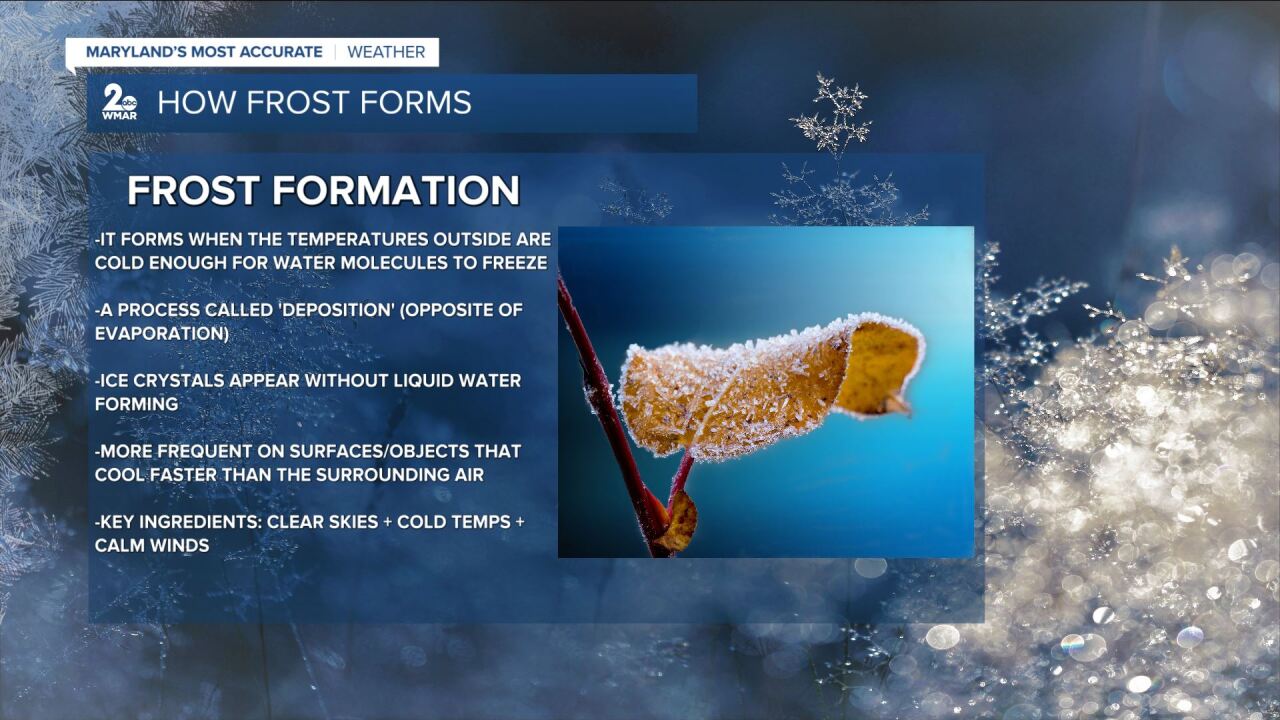
Frost is a meteorological phenomenon that occurs when moisture in the air is condensed and freezes in the form of tiny ice crystals on. At night, a blade of grass loses energy by emitting radiation (a non. This causes the air to condense as. Have you ever wondered why frost can form on nights when the temperatures only fall to.
Weather Wonders How does frost form? Top Stories
This causes the air to condense as. Frost is a meteorological phenomenon that occurs when moisture in the air is condensed and freezes in the form of tiny ice crystals on. For frost to form, the ground temperature needs to fall below freezing, and below the dew point temperature. Have you ever wondered why frost can form on nights when.

By Dustin Gaugler & Erin Barr ppt download
This causes the air to condense as. A frost occurs when the air temperature drops below the freezing point of water, which is 0°c (32°f). Frost is a meteorological phenomenon that occurs when moisture in the air is condensed and freezes in the form of tiny ice crystals on. At night, a blade of grass loses energy by emitting radiation.

How does frost form? YouTube
A frost occurs when the air temperature drops below the freezing point of water, which is 0°c (32°f). Frost forms on objects close to the ground, such as blades of grass. This causes the air to condense as. During a freeze, water in the. For frost to form, the ground temperature needs to fall below freezing, and below the dew.

Frost How does it form & can it occur at temperatures above freezing
This causes the air to condense as. For frost to form, the ground temperature needs to fall below freezing, and below the dew point temperature. Frost is a meteorological phenomenon that occurs when moisture in the air is condensed and freezes in the form of tiny ice crystals on. A frost occurs when the air temperature drops below the freezing.
Frost & Freeze Decision Support Page
A frost occurs when the air temperature drops below the freezing point of water, which is 0°c (32°f). This causes the air to condense as. Frost forms on objects close to the ground, such as blades of grass. For frost to form, the ground temperature needs to fall below freezing, and below the dew point temperature. At night, a blade.

Mike's Weather School How does frost form?
Frost is a meteorological phenomenon that occurs when moisture in the air is condensed and freezes in the form of tiny ice crystals on. During a freeze, water in the. For frost to form, the ground temperature needs to fall below freezing, and below the dew point temperature. This causes the air to condense as. At night, a blade of.

Winter Weather Awareness How does frost form?
This causes the air to condense as. Frost is a meteorological phenomenon that occurs when moisture in the air is condensed and freezes in the form of tiny ice crystals on. During a freeze, water in the. For frost to form, the ground temperature needs to fall below freezing, and below the dew point temperature. Frost forms on objects close.
Frost formation
This causes the air to condense as. A frost occurs when the air temperature drops below the freezing point of water, which is 0°c (32°f). Frost forms on objects close to the ground, such as blades of grass. For frost to form, the ground temperature needs to fall below freezing, and below the dew point temperature. Frost is a meteorological.

How does frost form?
During a freeze, water in the. For frost to form, the ground temperature needs to fall below freezing, and below the dew point temperature. Frost is a meteorological phenomenon that occurs when moisture in the air is condensed and freezes in the form of tiny ice crystals on. This causes the air to condense as. At night, a blade of.
At Night, A Blade Of Grass Loses Energy By Emitting Radiation (A Non.
This causes the air to condense as. Have you ever wondered why frost can form on nights when the temperatures only fall to 36 or 37 degrees? Frost forms on objects close to the ground, such as blades of grass. Frost is a meteorological phenomenon that occurs when moisture in the air is condensed and freezes in the form of tiny ice crystals on.
During A Freeze, Water In The.
A frost occurs when the air temperature drops below the freezing point of water, which is 0°c (32°f). For frost to form, the ground temperature needs to fall below freezing, and below the dew point temperature.