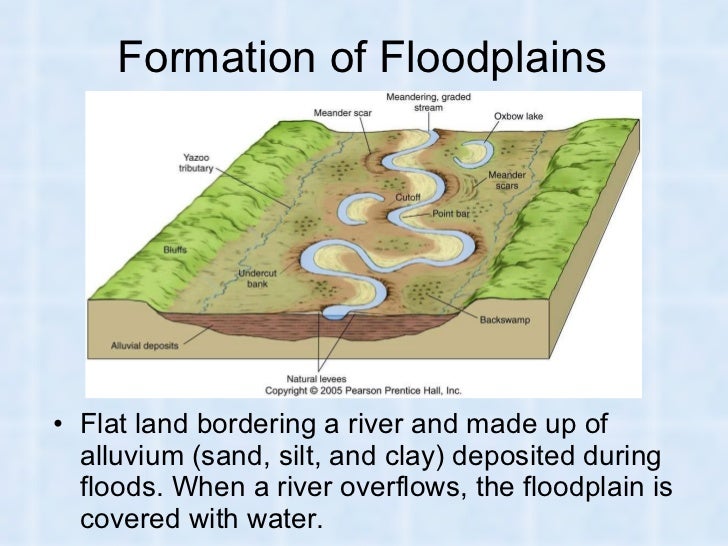
How Are Floodplains Formed - There are two major processes involved in the natural development of floodplains: Erosion removes any interlocking spurs, creating a wide, flat area on either side of the. Floodplains stretch from the banks of a river channel to the base of. Floodplains are formed by the natural process of rivers and streams overflowing their banks and depositing sediment on the adjacent. A floodplain or flood plain or bottomlands[1] is an area of land adjacent to a river. Floodplains form due to erosion and deposition.
Floodplains form due to erosion and deposition. Erosion removes any interlocking spurs, creating a wide, flat area on either side of the. A floodplain or flood plain or bottomlands[1] is an area of land adjacent to a river. There are two major processes involved in the natural development of floodplains: Floodplains stretch from the banks of a river channel to the base of. Floodplains are formed by the natural process of rivers and streams overflowing their banks and depositing sediment on the adjacent.
There are two major processes involved in the natural development of floodplains: Floodplains are formed by the natural process of rivers and streams overflowing their banks and depositing sediment on the adjacent. Floodplains stretch from the banks of a river channel to the base of. Floodplains form due to erosion and deposition. A floodplain or flood plain or bottomlands[1] is an area of land adjacent to a river. Erosion removes any interlocking spurs, creating a wide, flat area on either side of the.

Surface Water Rivers. ppt download
There are two major processes involved in the natural development of floodplains: Floodplains form due to erosion and deposition. A floodplain or flood plain or bottomlands[1] is an area of land adjacent to a river. Floodplains stretch from the banks of a river channel to the base of. Floodplains are formed by the natural process of rivers and streams overflowing.

The lower course of the river ppt download
Floodplains form due to erosion and deposition. A floodplain or flood plain or bottomlands[1] is an area of land adjacent to a river. Erosion removes any interlocking spurs, creating a wide, flat area on either side of the. There are two major processes involved in the natural development of floodplains: Floodplains stretch from the banks of a river channel to.

Diagram Of Floodplain Floodplain Analysis
Floodplains are formed by the natural process of rivers and streams overflowing their banks and depositing sediment on the adjacent. Floodplains stretch from the banks of a river channel to the base of. Erosion removes any interlocking spurs, creating a wide, flat area on either side of the. Floodplains form due to erosion and deposition. A floodplain or flood plain.
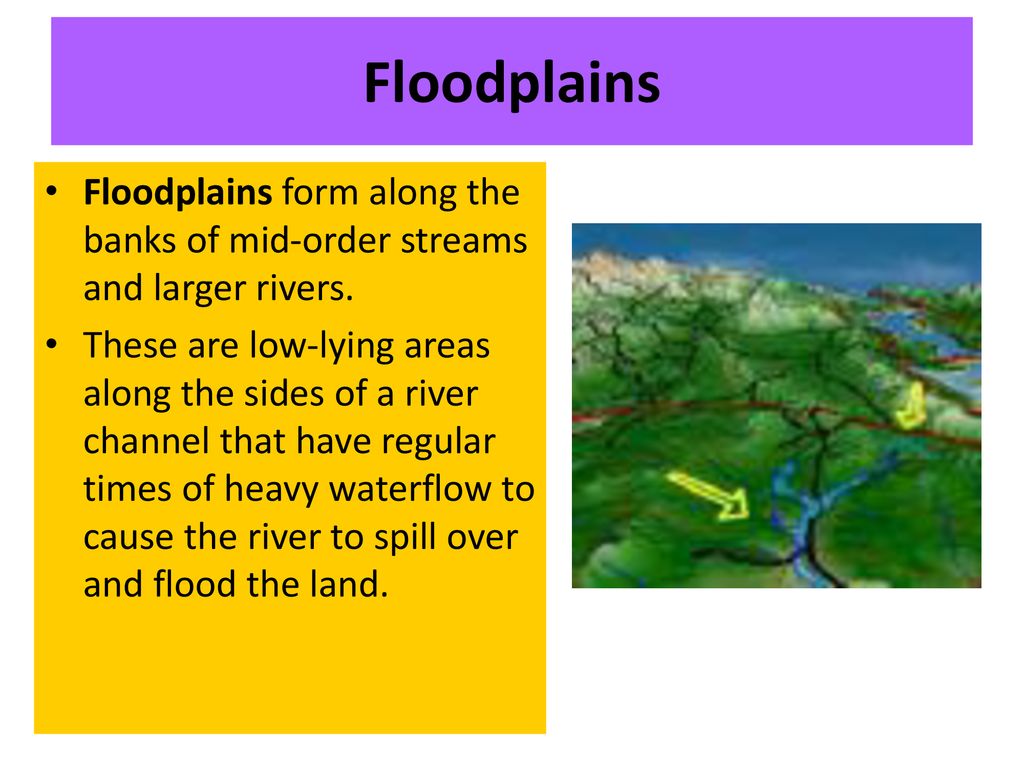
Erosion and deposition ppt download
Floodplains are formed by the natural process of rivers and streams overflowing their banks and depositing sediment on the adjacent. Erosion removes any interlocking spurs, creating a wide, flat area on either side of the. Floodplains form due to erosion and deposition. A floodplain or flood plain or bottomlands[1] is an area of land adjacent to a river. There are.
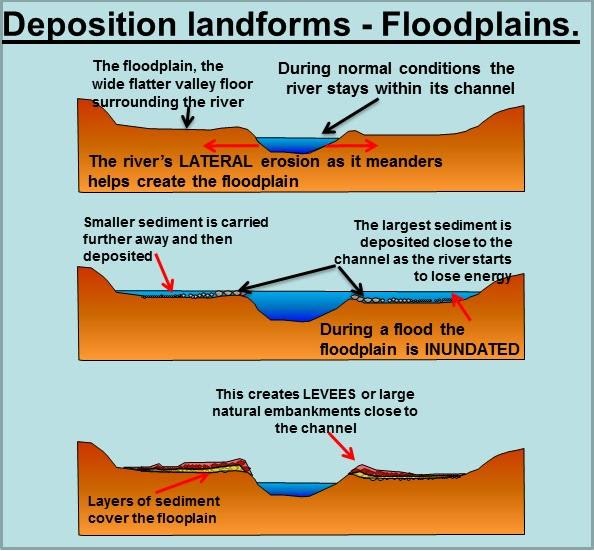
Floodplains Facts, What, Uses A Level Geography Notes
Erosion removes any interlocking spurs, creating a wide, flat area on either side of the. Floodplains form due to erosion and deposition. Floodplains are formed by the natural process of rivers and streams overflowing their banks and depositing sediment on the adjacent. There are two major processes involved in the natural development of floodplains: A floodplain or flood plain or.
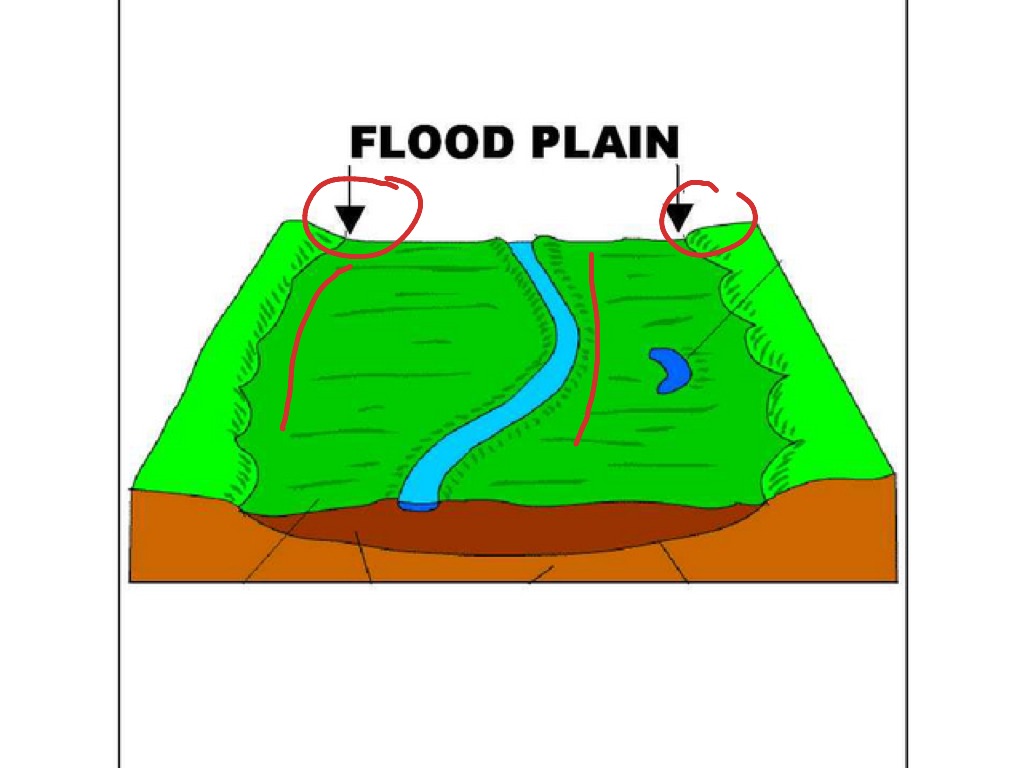
How is a Floodplain formed? Geography ShowMe
A floodplain or flood plain or bottomlands[1] is an area of land adjacent to a river. Floodplains form due to erosion and deposition. Erosion removes any interlocking spurs, creating a wide, flat area on either side of the. Floodplains stretch from the banks of a river channel to the base of. Floodplains are formed by the natural process of rivers.

Floodplains + levees formation Diagram Quizlet
There are two major processes involved in the natural development of floodplains: Floodplains stretch from the banks of a river channel to the base of. Floodplains form due to erosion and deposition. Floodplains are formed by the natural process of rivers and streams overflowing their banks and depositing sediment on the adjacent. A floodplain or flood plain or bottomlands[1] is.

Landforms and Biomes. ppt download
Floodplains stretch from the banks of a river channel to the base of. Floodplains form due to erosion and deposition. Floodplains are formed by the natural process of rivers and streams overflowing their banks and depositing sediment on the adjacent. There are two major processes involved in the natural development of floodplains: A floodplain or flood plain or bottomlands[1] is.
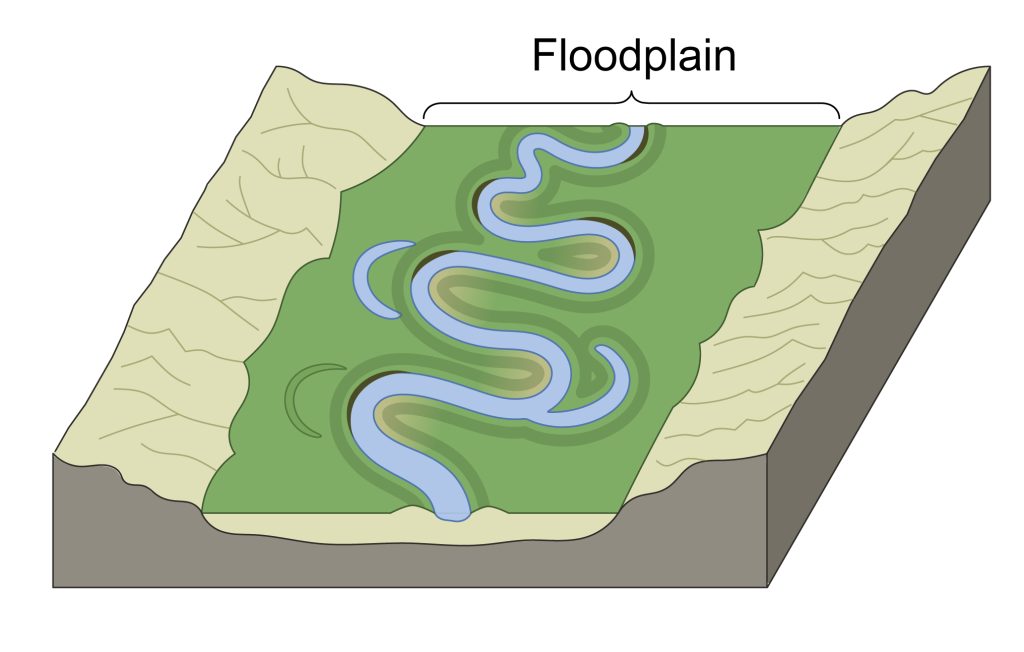
What is a Flood Plain & How are Floodplains Formed?
Erosion removes any interlocking spurs, creating a wide, flat area on either side of the. A floodplain or flood plain or bottomlands[1] is an area of land adjacent to a river. Floodplains form due to erosion and deposition. There are two major processes involved in the natural development of floodplains: Floodplains are formed by the natural process of rivers and.
River landforms in the upper course
Floodplains are formed by the natural process of rivers and streams overflowing their banks and depositing sediment on the adjacent. There are two major processes involved in the natural development of floodplains: Floodplains form due to erosion and deposition. A floodplain or flood plain or bottomlands[1] is an area of land adjacent to a river. Floodplains stretch from the banks.
Floodplains Form Due To Erosion And Deposition.
There are two major processes involved in the natural development of floodplains: Floodplains stretch from the banks of a river channel to the base of. Erosion removes any interlocking spurs, creating a wide, flat area on either side of the. Floodplains are formed by the natural process of rivers and streams overflowing their banks and depositing sediment on the adjacent.