Equivalent Form - The equivalent form for g(x) = 7sin(2x) is given by option (a): This shows that the expression decays exponentially as t increases. We have to write an equivalent form of compound inequality. The equation used to represent. Compound inequality consists of two inequalities joined together and the. G(x) = 14cos(x)sin(x) since it follows the double angle identity for sine. The equivalent form of the expression 1800(1.2)−t is 1800 ⋅ (65)t. F (t) = 50e−kt after two days, the scientist receives a second shipment of 50 grams of the same element.
We have to write an equivalent form of compound inequality. The equivalent form for g(x) = 7sin(2x) is given by option (a): The equation used to represent. This shows that the expression decays exponentially as t increases. F (t) = 50e−kt after two days, the scientist receives a second shipment of 50 grams of the same element. Compound inequality consists of two inequalities joined together and the. The equivalent form of the expression 1800(1.2)−t is 1800 ⋅ (65)t. G(x) = 14cos(x)sin(x) since it follows the double angle identity for sine.
This shows that the expression decays exponentially as t increases. The equation used to represent. The equivalent form for g(x) = 7sin(2x) is given by option (a): We have to write an equivalent form of compound inequality. F (t) = 50e−kt after two days, the scientist receives a second shipment of 50 grams of the same element. Compound inequality consists of two inequalities joined together and the. The equivalent form of the expression 1800(1.2)−t is 1800 ⋅ (65)t. G(x) = 14cos(x)sin(x) since it follows the double angle identity for sine.

Equivalent Forms of Exponential Equations YouTube
G(x) = 14cos(x)sin(x) since it follows the double angle identity for sine. The equivalent form of the expression 1800(1.2)−t is 1800 ⋅ (65)t. Compound inequality consists of two inequalities joined together and the. We have to write an equivalent form of compound inequality. The equation used to represent.
Finding Equivalent Forms of Exponential Expressions Algebra
F (t) = 50e−kt after two days, the scientist receives a second shipment of 50 grams of the same element. The equivalent form for g(x) = 7sin(2x) is given by option (a): G(x) = 14cos(x)sin(x) since it follows the double angle identity for sine. We have to write an equivalent form of compound inequality. This shows that the expression decays.

Exponent Rules Math ppt download
F (t) = 50e−kt after two days, the scientist receives a second shipment of 50 grams of the same element. This shows that the expression decays exponentially as t increases. G(x) = 14cos(x)sin(x) since it follows the double angle identity for sine. The equivalent form of the expression 1800(1.2)−t is 1800 ⋅ (65)t. The equivalent form for g(x) = 7sin(2x).
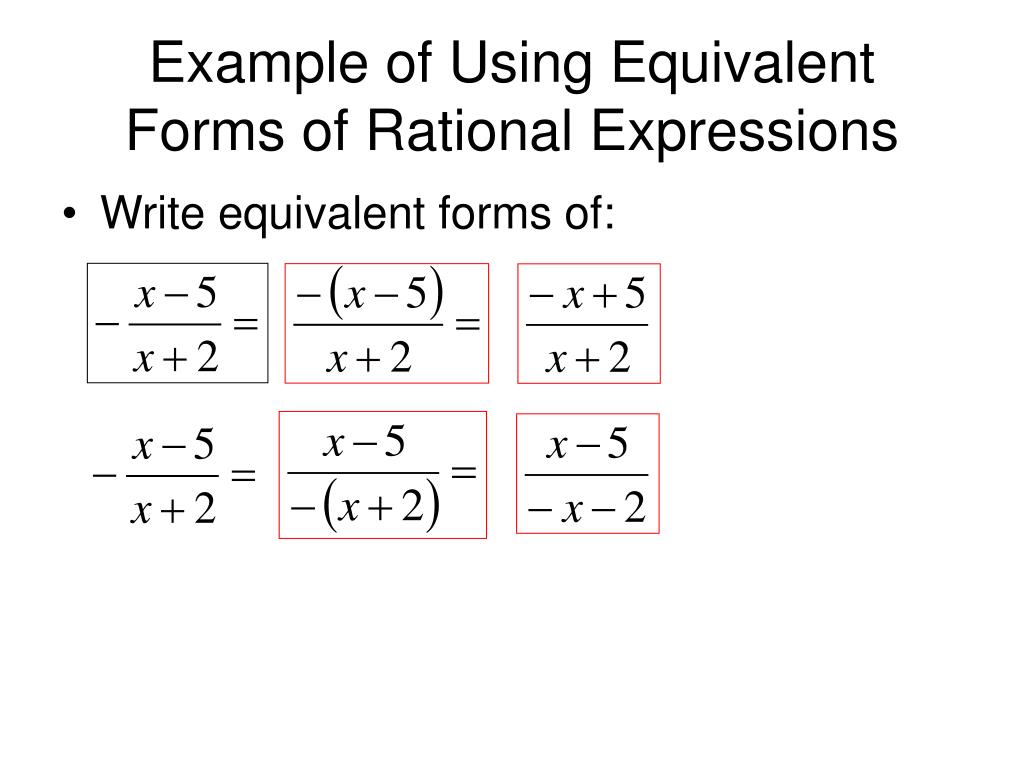
PPT Intermediate Algebra PowerPoint Presentation, free download ID
G(x) = 14cos(x)sin(x) since it follows the double angle identity for sine. We have to write an equivalent form of compound inequality. The equivalent form of the expression 1800(1.2)−t is 1800 ⋅ (65)t. This shows that the expression decays exponentially as t increases. Compound inequality consists of two inequalities joined together and the.

Equivalent Forms of Exponential Expressions Algebra 2 for Teens
We have to write an equivalent form of compound inequality. The equivalent form for g(x) = 7sin(2x) is given by option (a): Compound inequality consists of two inequalities joined together and the. G(x) = 14cos(x)sin(x) since it follows the double angle identity for sine. F (t) = 50e−kt after two days, the scientist receives a second shipment of 50 grams.

Equivalent Equations Standard Form vs SlopeIntercept Form YouTube
Compound inequality consists of two inequalities joined together and the. The equation used to represent. F (t) = 50e−kt after two days, the scientist receives a second shipment of 50 grams of the same element. The equivalent form of the expression 1800(1.2)−t is 1800 ⋅ (65)t. G(x) = 14cos(x)sin(x) since it follows the double angle identity for sine.

Rational Expressions Equivalent Forms ppt download
G(x) = 14cos(x)sin(x) since it follows the double angle identity for sine. This shows that the expression decays exponentially as t increases. F (t) = 50e−kt after two days, the scientist receives a second shipment of 50 grams of the same element. The equivalent form of the expression 1800(1.2)−t is 1800 ⋅ (65)t. Compound inequality consists of two inequalities joined.

Equivalent Fractions and Simplest Form of Fractions Math Grade4,5
G(x) = 14cos(x)sin(x) since it follows the double angle identity for sine. The equivalent form for g(x) = 7sin(2x) is given by option (a): The equivalent form of the expression 1800(1.2)−t is 1800 ⋅ (65)t. F (t) = 50e−kt after two days, the scientist receives a second shipment of 50 grams of the same element. The equation used to represent.

4.5 Equivalent Forms of the Equation of a Quadratic Function YouTube
The equivalent form for g(x) = 7sin(2x) is given by option (a): G(x) = 14cos(x)sin(x) since it follows the double angle identity for sine. We have to write an equivalent form of compound inequality. The equation used to represent. This shows that the expression decays exponentially as t increases.

Equivalent Equations in Algebra
We have to write an equivalent form of compound inequality. The equation used to represent. This shows that the expression decays exponentially as t increases. G(x) = 14cos(x)sin(x) since it follows the double angle identity for sine. F (t) = 50e−kt after two days, the scientist receives a second shipment of 50 grams of the same element.
The Equivalent Form For G(X) = 7Sin(2X) Is Given By Option (A):
G(x) = 14cos(x)sin(x) since it follows the double angle identity for sine. This shows that the expression decays exponentially as t increases. F (t) = 50e−kt after two days, the scientist receives a second shipment of 50 grams of the same element. The equation used to represent.
Compound Inequality Consists Of Two Inequalities Joined Together And The.
The equivalent form of the expression 1800(1.2)−t is 1800 ⋅ (65)t. We have to write an equivalent form of compound inequality.